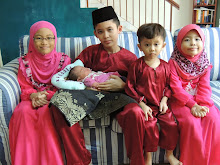
header-photo

When You Thought I wasn't Looking


When you thought I wasn't looking you hung my first painting on the refrigerator, and I wanted to paint another.


When you thought I wasn't looking you fed a stray cat, and I thought it was good to be kind to animals.


When you thought I wasn't looking you baked a birthday cake just for me, and I knew that little things were special things.


When you thought I wasn't looking you said a prayer, and I believed there was a God that I could always talk to.


When you thought I wasn't looking you kissed me good-night, and I felt loved.


When you thought I wasn't looking I saw tears come from your eyes, and I learned that sometimes things hurt--but that it's all right to cry.


When you thought I wasn't looking you smiled, and it made me want to look that pretty, too.


When you thought I wasn't looking you cared, and I wanted to be everything I could be.


When you thought I wasn't looking--I looked . . . and wanted to say thanks for all those things you did when you thought I wasn't looking.


By MARY RITA SCHILKE KORZAN
from The Baby Loft Blog

Staying healthy while fasting

Staying healthy while fasting

Keep your strength up and your weight down with our helpful hints to a
healthy Ramadhan.

Tip 1
Eat slow-digesting foods
This is particularly helpful at suhoor time when eating a high-fibre
meal of oats or wheat cereal could carry on giving you energy for up to
eight hours.
Cook meals using slow-digesting foods such as barley, wheat, oats,
millet, semolina, beans, lentils, wholemeal flour, unpolished rice, etc.
(complex carbohydrates).

Tip 2
Fill up on fibre
Foods that are high in fibre are also great for energy levels. In
addition, they can help prevent constipation and painful piles. High fibre
foods include whole wheat, grains and seeds, vegetables like green
beans, peas, marrow, corn,
spinach, fruit with skin and dried fruit like dried apricots, figs and
prunes.

Tip 3
Keep it balanced
Eat a well-balanced diet, containing foods from each food group:
fruits, vegetables, meat/chicken/fish, bread/cereals and dairy products
including cheese and yoghurt. Don't be tempted to binge on junk food or
sugary snacks.

Tip 4
Avoid the deep fat fryer
Cut down on the amount of fried food you eat and avoid fatty foods as
much as possible. Try stir-frying, grilling or steaming your food
instead of drowning it in oil. You will appreciate the fresher taste and your
heart and waistline will thank you for it.


Tip 5
Fruit for iftar
Instead of serving deep-fried samosas and pakoras at iftar time, try
fruit kebabs with a tasty yoghurt dip or vegetable with humus
or salsa. They are healthier, taste great, and make it easy to get your
five portions of fruit and vegetables a day. Dates, oranges and bananas
work particularly well together after a day of fasting.

Tip 6
Re-hydrate yourself
Drink as much water as possible between iftar and bedtime to ensure you
replenish your body's fluid levels. You can also drink fruit juice.
Remember that a glass of pure juice counts as one of your five daily
portions but cola doesn't!

Insha Allah, these ideas will help see you through the month in health,
happiness and more than enough energy for ibaadah, may Allah SWT
accept it from us all, ameen.


NOTES ON THE EDUCATION OF MUSLIM CHILDREN

NOTES ON THE EDUCATION OF MUSLIM CHILDREN

by Ibrahim B. Syed, Ph. D.
President
Islamic Research Foundation International, Inc.
7102 W. Shefford Lane
Louisville, KY 40242-6462, USA

E-mail:
IRFI@INAME.COM
Website:
http://WWW.IRFI.ORG


Foundation of Education

Education is the birth right of every Muslim and Muslimah. Investment in education is the best investment one can make, because it eventually leads to intellectual property. Intellectual property is the intangible property, which no one can steal or destroy. This is the property on which no Government can levy a tax. Hence, the foundation for education should start from childhood. It becomes imperative that the education of children be given the utmost importance as the prime duty to every parent, society, Government and nation.

Islamic Traditions

To the Muslims a child is a trust from Allah (SWT) in the hands of the parents. The heart of a child can be compared to a fine and clean slate without any writing on it. Hence the child could be developed into any type of human being depending on what type of environment he or she is exposed to. If a child is educated in the traditions of goodness including the Noble Qur'an and the Seerah of the Prophet Muhammad (SAS), he or she will surely follow the truth when grown up and will attain health, happiness, and success both in this world and the hereafter. The reaching of great heights by the child gives the greatest pleasure both to the parents and the teachers. Even the community and the nation share in the child's achievements. On the other hand, lack of proper education destroys the bright future of the child. The blame and responsibility for this unpleasant and sad deed has to be shared both by the parents and the teachers, as well as the community and the nation. Therefore parenting is not any easy task. In some societies people literally spit on the faces of the parents whose children have gone astray. Right from the beginning parents should impart good conduct to their children and discourage them from bad company. Children should be taught to exercise control in self-adornment, extremes of pleasure and comfort.

The care of the child starts from the time of birth. Bottle-feeding should be kept away unless the mother has problems in breast-feeding. The virtues of breast-feeding to the child and the mother have been elaborated elsewhere by the author. The mother's milk not only nourishes the body and immunizes it but also builds up the mind and strengthens the emotional bonds of love and affection.

Teaching Manners

When the child reaches an age enabling him or her to distinguish things, greater care should be taken to teach good manners and respect for others. This is the time to teach table manners particularly Islamic traditions - recitation of Bismillah ("In the name of Allah"), using the right hand to eat, to eat from the plate the items near to him or her, not getting greedy at other's eating, to chew food thoroughly and slowly, avoiding haste, preventing of smearing one's hands on clothes. Mothers should be careful not to inculcate the habit of overeating. Parents should emphasize eating plenty of fresh vegetables and fruits, reducing salt intake, discourage consumption of chocolates, sweets, candies, coffee, tea, soft drinks and encourage drinking of skim milk, fruit juices, low calorie, cholesterol-free, fat-free ice creams, yogurts.

Children must be complimented for moderate eating and for sharing food and toys with other children, so that they can learn sharing and self-sacrificing, as these qualities will lead to success in their married and professional lives. Children should be taught to develop simplicity and humility in their actions and behavior.

Teaching the 3 Rs

Children should attend schools to learn reading, writing and arithmetic, in addition they should be taught the Qur'an, Seerah of Prophet Muhammad (SAS), Islamic history and stories of the Muslim Heroes and Heroines, so that the values and virtues in these things may take root in their hearts. Apart from sciences and mathematics children must be allowed to read world history, poetry, literature, art, fiction, etc.

Child Discipline

Children should be praised for their good actions and behavior and rewarded but seldom monetarily. This will make the children pleased and encouraged to repeat their good deeds. Whenever children commit mistakes or undesirable acts for the first time, they should be forgiven and their acts or misdeeds should be corrected in a loving and affectionate way without any harshness. Children should not be scolded frequently, particularly in front of their playmates or other adults. Scolding makes them insensitive and they continue the bad acts and may acquire undesirable habits. However the parents should communicate with their children and the father should not only talk to them but also discipline them without any physical harm. The mother should show her love and affection and at the same time remind them of their father's warnings and tell them to keep away from evil things.

During the day time children should be allowed to study and also to play otherwise their intellect will be dulled, and their physical bodies will not be in good shape. At night they must go to bed early. "Early to bed and early to rise make one healthy, wealthy, and wise." Children should not be allowed to do anything in secret, as it may encourage them to bad things and hide them from parents, teachers and friends. Openness, frankness and honesty are great virtues of leadership. At the same time, the children must be taught not to boast to their friends about parents' possessions, their living conditions, and family matters. Children must be taught to respect others and to show gentleness and humility.

Teaching by Action

If parents are wealthy, their children should be exposed to the acts of Zakah, Sadaqah, fitrah charities towards the poor, kith, and kin, and other deserving poor people. If the parents are poor, their children should be taught to live within their means, to strive and work hard for a better life, but never to steal, rob, or cheat others for a living.

Children must be taught to respect parents and elders and to make room for them. Children should not swear in order to speak the truth. Their habit of taking oaths should be avoided. They should be taught good manners of sitting and speaking. They should be encouraged to ask questions, but should not become chatterboxes. They should distinguish the bad habits from good habits. They should avoid the company of those who have bad habits. They should keep away from children who smoke, drink alcohol, abuse drugs, violate morality, and ethics.

Good deeds....


This proverb makes me thinking about Islamic teachings on doing good deeds as much as we could in order to attain God's Satisfaction and an opportunity to enter Jannah. As a Muslim, we shouldn't stop trying our best from doing good deeds to everyone around us, without thinking and wondering of what can we get in return. We are encouraged to be nice to everybody, young and old, man and woman, living things and animals; anytime and anywhere without prejudice and condition. We should stop thinking of how other persons treat us. On the contrary, start thinking of how do we treat people around us: family, friends, colleagues, neighbours, etc. Do not ever try to demand nice treatment from other people before contemplating of how much have we been really nice to others and to what extent.

In our everyday lives, we may encounter failures, disappointments, angers, and many other negative things and incidents. We may even once in a while think that our efforts of being nice to the others are useless and in vain. However, whenever we start to feel down and feel 'tired of being nice because nobody treat us nicely', do bear in mind that Allah the Almighty is always Just. No good deed will turn out in vain. Most importantly, every single thing that we do is counted.

So don't be frustrated with our lives. Don't expect something in return from other people because Allah is the only one Whom we can depend on and hope for. As a teacher, we should just teach and deliver knowledge sincerely without wondering of how the students will rate our performance. As a mother, we must love our children unconditionally, do the house chores and sacrifice our time and self-interest for our family members without thinking of getting acknowledgment or reward. In essence, whatever we do, never expect reward from human being, since Allah is the only one who will assess our deeds.

How to teach your children calmness and peaceability

I find the world today far too loud and too noisy. Everyone is talkisng louder and louder, trying to be heard. Everyone need something. The only way to get someone’s attention is to yell louder than they are yelling. All these lead to people getting easily frustrated, angry and for some, violence. There is a need for more calmness and peacefulness.

Unknown to many people, the loud noises from TV programme (e.g. car chases, gun shots, murder, soap opera drama), rock music, traffic on the road, screaming from adults and children etc often cause a lot of imbalance to our emotion and sometime lead to unnecessary conflicts with other people.

A person who is calm and peaceful tend to be more accommodating rather argumentative. He often has the ability to understand how others feel rather than simply reacting to them. He is better in controlling his temper.

We need to teach our children calmness and peacefulness which provide them the security. Ability to maintain peace and control our temper is a very powerful and important value that is largely to produce love and create a harmonious home and work place. Understanding is the key. Children who are taught to try to be understand why things happen and why people behave in certain way at certain time will become calmer, and better in control. They will also have better relationship with people.

Peaceability means understanding, calmness, patience, control and accommodation. They are the opposite of anger, losing one’s temper, impatience and irritation. Peaceability does not mean the elimination or ignoring of emotion but rather to control them and to prevent them from causing hurt to other people.

Calmness and peaceability help others and ourselves feel better and feel to work better with one another. They are important values and contagious in nature. As you develop and demonstrate these qualities within you, other people will "catch" them or be influenced by you too, especially your children.

Here are some general guideline to teach your children calmness and peaceability:

Create a Peaceful Environment at Home. You can improve calmness in your home by:

- Playing restful music e.g. classical and baroque music such as Vivaldi’s Four Seasons, Handel’s Water Music and Johann Pachelbel’s Canon in D. These music create a feeling of relaxation, order and peace. They also help to concentrate better and being more creative in the things we do.

- Switch off the TV and invest the time with your children and spouse, talking and listening to what they have to say about their day in school, at work or at home. If you do this regular enough, your relationship with your family also improve tremendously. There is a greater sense of closeness among you.

- Controlling the tone and decibel level of your own voice. Do not yell as yelling destroy a peaceful atmosphere.

- Touching others in your family when you talk to them e.g. put on a shoulder or arm as your speak to someone. Look at their eyes when you are talking to them also help.

Sorry, put the blame on me.....


Yesterday, I've came across this lyrics while surfing the internet. It's a song by one of today's popular Western artist, Akon. I'm not going to talk about the melody or the popularity of this song (it's gaining high acceptance and popularity lately in my hometown), nevertheless, the meaning of the lyrics has caught my eyes and made my mind boggles, thinking and questioning about some of human behaviours:


-Why human beings seldom admit their mistakes ?
-Why human always blame other persons for everything they just couldn't do or get?
-Why human can't accept other person's mistakes and forgive them with an open heart?
-Why human fails to see their own mistakes and weakness?
-Why human prefers finding other's fault and mistakes rather than contemplating on his own?
-Why is it so difficult for us to say sorry and apologize?


Do we realize that being a 'servant of Allah', we have no rights to blame other person for all the things that just didn't turn out well as we planned? In Islam, we must believe in the qada' and 'qadar' of Allah... destiny, fate...Allah's plan for us.

Most importantly, Allah knows best for us. As a human being with many limitations and weaknesses, we should always bear in minds that since Allah is Most-Knowing and Most-Gracious, whatever Allah has destined our lives to be is the best for us, eventhough evidently it is against our own hopes and preferences.


So, if all of us can reflect our own attitudes and contemplate on our own behaviours, we could come to a conclusion that blaming each other will not give us any solution to our everyday problems. We are human beings, whom are not free from making any mistakes or wrongs. that's why, remember, before we blame other person, always think of our own mistakes.

On top of that, don't feel reluctant to admit our mistakes and take the responsibilities. A true believer (mu'min) will confess his mistakes and wrongs upon Allah and asks for His Forgiveness.

That's why, when I read through the lines of this song entitled "Sorry..put the blame on me", I wonder if everyone of us are able to admit mistakes and say sorry profoundly, we could make this world a better place for us to live, and subsequently a better means to seek Allah's Satisfction, insya Allah.


"As life goes on I'm starting to learn more and more about responsibility
I realize everything I do is affecting the people around me
So I want to take this time out and apologize for things I have done
And things that have not occurred yet
And the things they don't want to take responsibility for

I'm sorry for the times I left you home
I was on the road and you were alone
I'm sorry for the times that I had to go
I'm sorry for the fact that I did not know
That you were sitting home just wishing we
Could go back to when it was just you and me
I'm sorry for the times I would neglect
I'm sorry for the times I disrespect

I'm sorry for the wrong things that I've done
I'm sorry I'm not always there for my son
I'm sorry for the fact that I am not aware
That you can't sleep at night when I am not there
Because I am in the streets like everyday
Sorry for the things that I did not say
Like how you are the best thing in my world
And how I am so proud to call you my girl


I understand that there are some problems
And I am not too blind to know
All the pain you kept inside you
Even though you might not show
If I can apologize for being wrong
Then it's just a shame on me
I'll be the reason for your pain and you can put the blame on me"

Supplication


This is one of my fave nasheed by sami. It really reaches the soul.

My World, My Happiness

my world, my happiness
Powered by Smilebox
Click to play | Make your own Smilebox